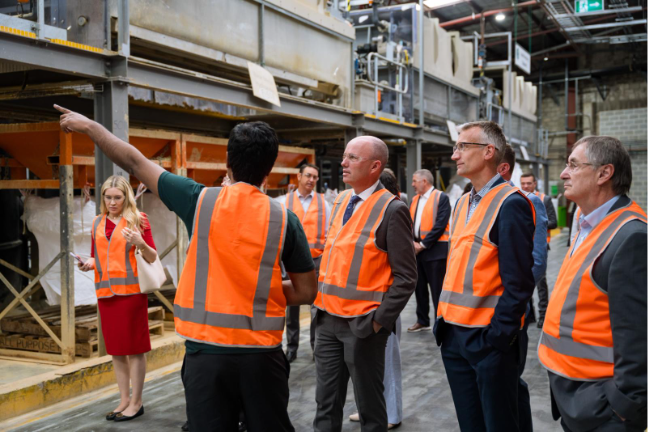
Utah Governer Spencer Cox visits Mint's Sydney facility
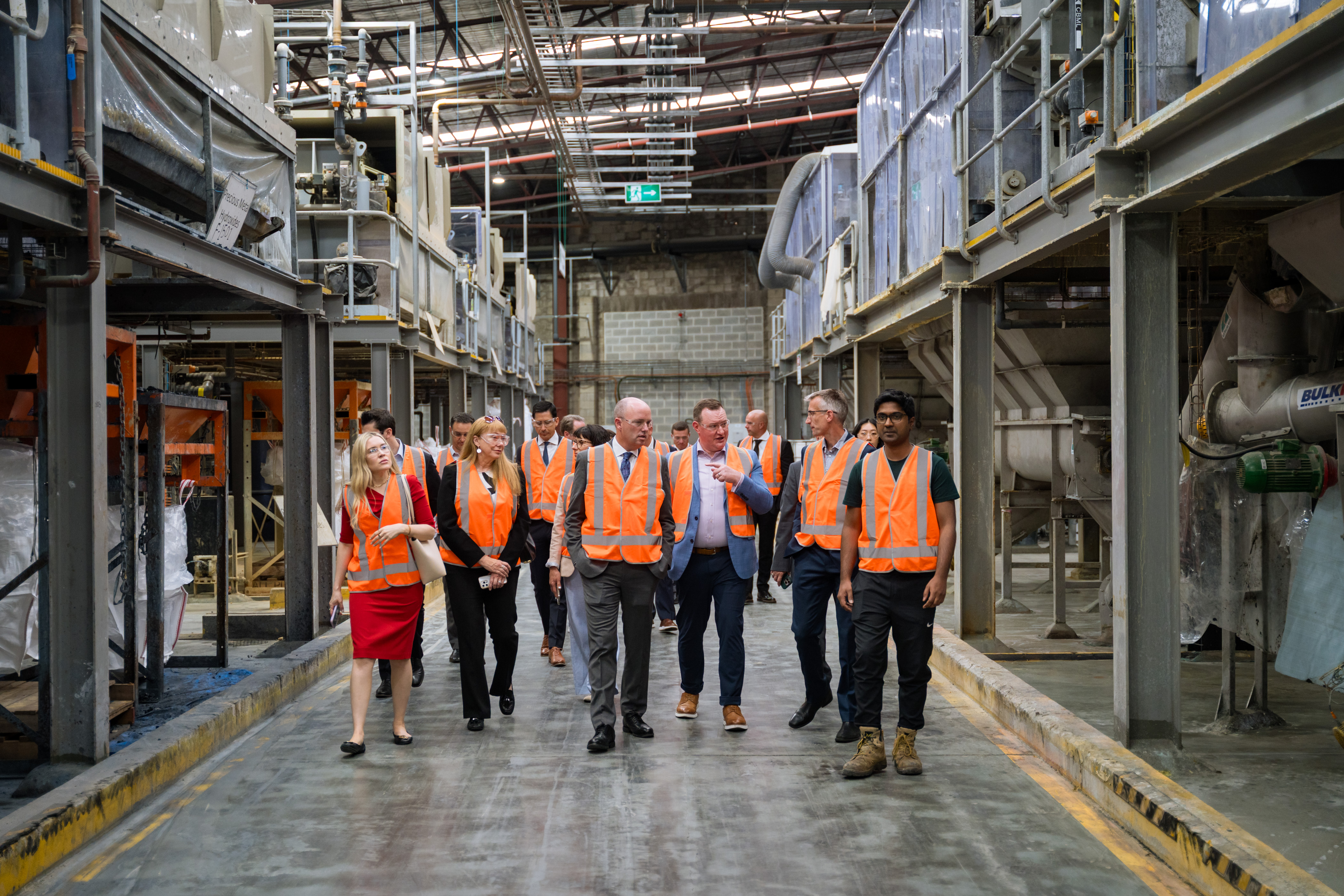
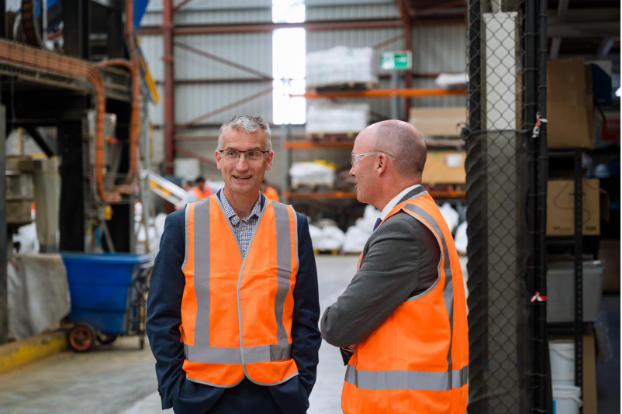
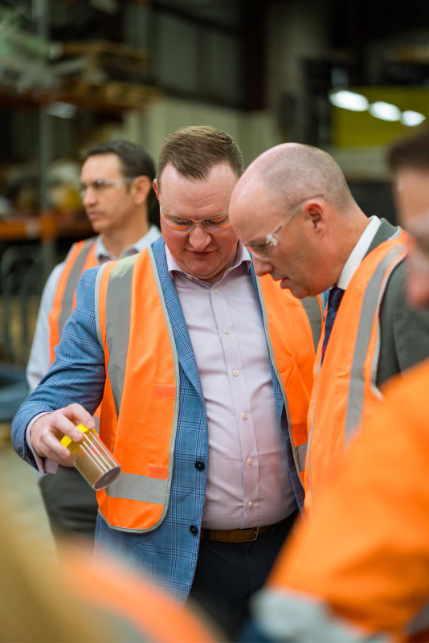
In October, Mint Innovation hosted Utah Governor Spencer Cox and a team of critical minerals delegates at our Sydney facility. Facilitated by the U.S. consulate commercial service as part of the Utah Trade Mission in Australia and New Zealand, the visit highlights the growing international collaboration between Australia and the U.S. particularly in connection with critical minerals and defense.
Discussions during the visit echoed a challenge confronting every advanced economy: the same technologies driving economic growth also depend on materials that are increasingly difficult to source sustainably. This creates an interesting paradox: devices that drive innovation also generate one of its most valuable waste streams.
For the United States, e-waste is either collected locally and exported offshore for processing or ends up in landfill. Both options detract from the economy and the environment. The stream that flows offshore, carries with it critical minerals that power local manufacturing across a range of industries including defense, technology, and clean energy.
Recent investigations, have quantified the exports of ten U.S. recyclers to be c.170,000 tonnes of e-waste worth over USD $1 billion with industry-wide flows potentially reaching USD $200 million a month.
The economic impact is clear, but the implications extend into health, safety, and national security. Some of the exported waste is processed under unsafe conditions in developing countries, where recyclers are exposed to toxic materials and valuable components can re-enter global supply chains as counterfeit parts. The result is that the U.S. forfeits not only material value, but strategic control – weakening its ability to secure critical inputs and trace integrity across defense and technology supply chains.
Some states, however, are beginning to close this gap. Utah stands out among them.
Utah’s leadership in critical minerals is well established. The state produces 40 of the 50 minerals designated as critical by the U.S. government and remains the nation’s sole producer of beryllium concentrate (its only domestic source of magnesium metal) and one of two states producing lithium as a byproduct. Together, these resources underpin the technologies driving electric mobility, renewable energy, and advanced manufacturing.
What stands out, however, is not only Utah’s mineral dominance but its approach to innovation. The state recognises that sustainable resource recovery extends beyond extraction. Keeping metals circulating within domestic supply chains is the next frontier, and one that Mint’s technology is designed to unlock.
Over time, Utah has built the components of a critical minerals ecosystem, even if not formally labelled as one. Salt Lake City’s CHaRM program provides a functioning public collection system for hard-to-recycle materials, giving the state a head start on feedstock supply – the foundation of recovery economics. Mint recognises this same principle – we prioritize engagement within communities we operate in through our Get eWise program, encouraging awareness and local participation in e-waste recycling.
Utah’s industrial base completes the loop. A fast-growing cluster of data-centre facilities and an established network of defense and manufacturing companies create both the demand for recovered metals and the opportunity for secure, traceable domestic supply.
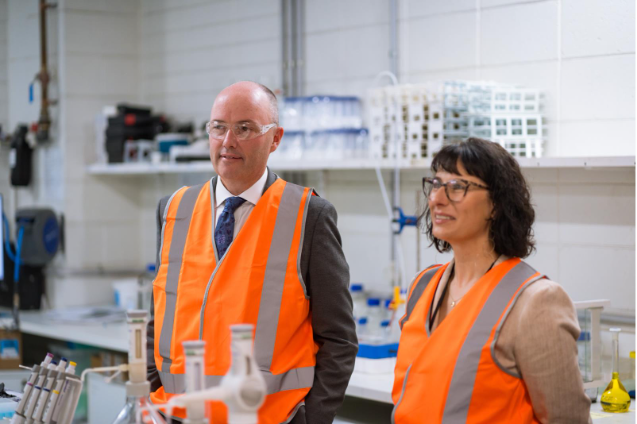
Governor Cox’s visit to Mint reflected Utah’s proactive approach to economic resilience and the alignment between U.S. and Australian innovation.
“Utah’s mineral richness is only the beginning. The real opportunity lies in turning that natural advantage into systems that keep value within our communities and our country. Our visit to Mint’s Sydney facility showed what could be possible when state infrastructure connects with global innovation.” says Spencer J. Cox, Governor of Utah.
Building on Sydney and Texas, Mint is looking to expand its footprint through a network of U.S. facilities designed to recover critical and strategic metals at scale. Each site will serve regional supply chains, providing localized recovery and processing capability. Our search for the next facility is already underway and there are several promising locations.
As U.S. states work to strengthen critical-mineral supply chains, partnerships between technology providers and resource-rich regions will be essential. By combining natural resources, industrial capability, and advanced recycling, states can meet national priorities in sustainability and security while creating long-term economic resilience.
More articles from us
.png)
Mint Innovation collaborates with HP to produce industry-first closed-loop recycled copper
March 4, 2026
Mint Innovation collaborates with HP to produce industry-first closed-loop recycled copper
March 4, 2026

